Research and resources on social cohesion theory and best practice.
The Belong Network Library
Research and resources on social cohesion theory and best practice.
Research and resources on social cohesion theory and best practice.
Research and resources on social cohesion theory and best practice.
The Belong Library is free to access and brings together a wide range of online resources produced by the public, private and civil society sectors to build the evidence base around social cohesion.
It is regularly updated and includes:
Please contact us if you are unable to find what you need – we’d be delighted to help.

This guidance on social cohesion authored by Belong and endorsed by the LGA, aims to help local authorities fulfil this role. It provides local authorities with the tools to address the challenges they face and share good practice, with the goal of building cohesive communities.
This report explores how sport, arts and culture can support community cohesion. The Local Government Association (LGA) commissioned the report in partnership with Belong, the Cohesion and Integration Network.
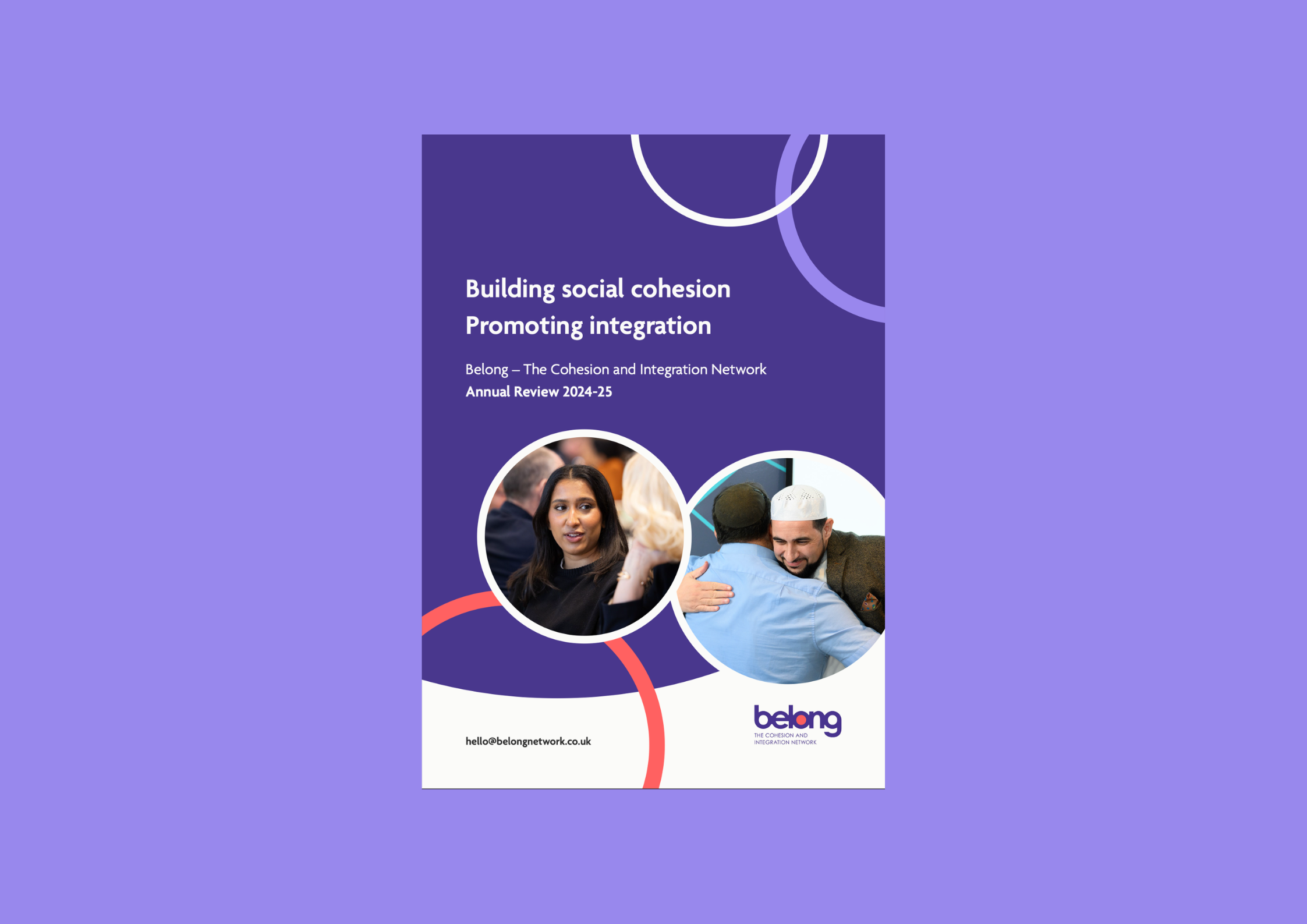
The Belong Annual Review 2024-25 highlights some of the remarkable work we have done in 2024-25 to build stronger, more connected and cohesive communities.

A comprehensive literature review examining how well communities in the UK live together, the forces shaping trust, belonging and participation, and the policy responses needed to strengthen cohesion. Developed for the Independent Commission on Community and Cohesion, it brings together research, data and learning from practice to inform future action.
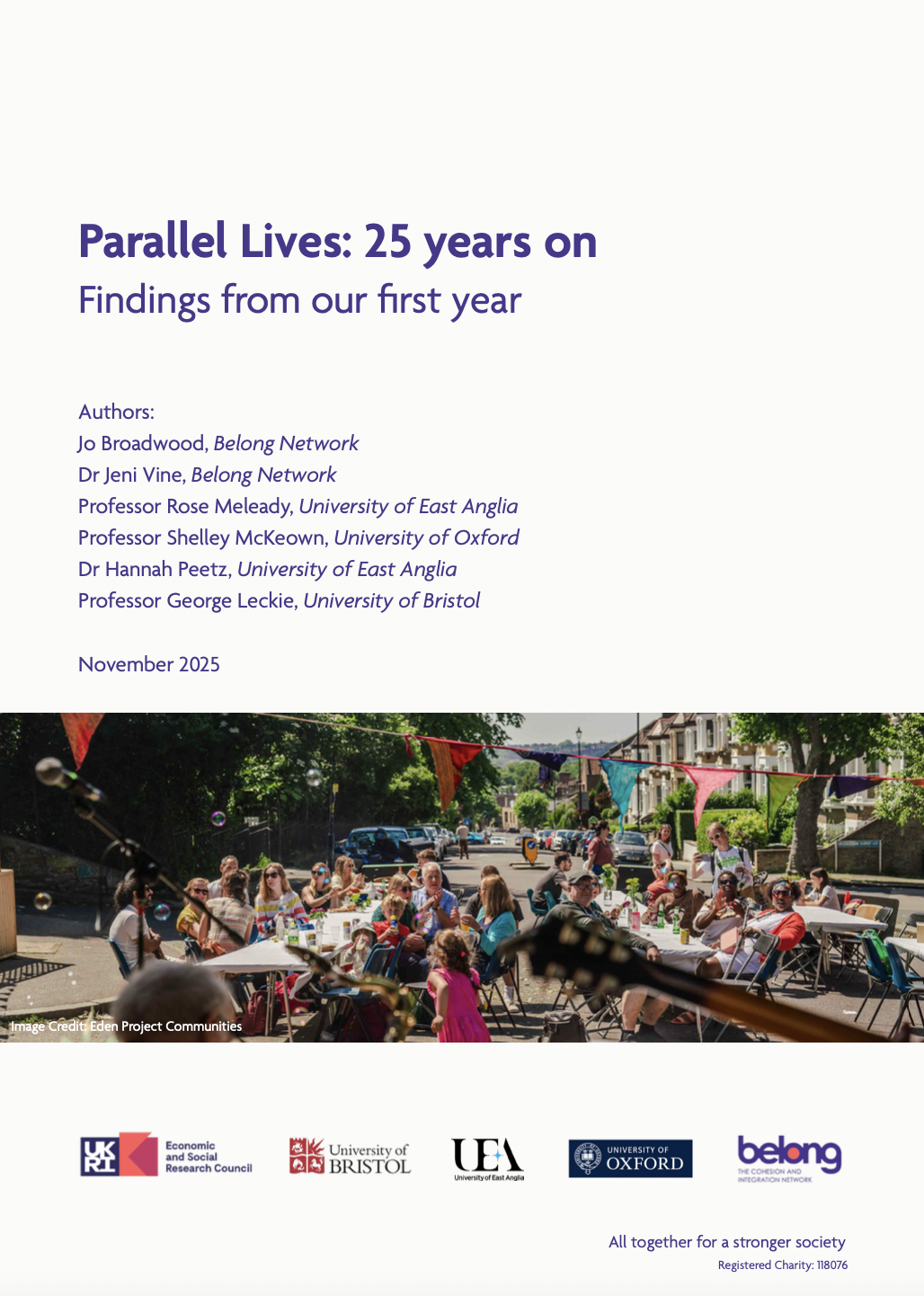
This findings paper summarises the results from the first year of Parallel Lives: 25 years on. This three-year ESRC funded project (2024-2027) is a partnership between the Universities of East Anglia, Oxford and Bristol, and the Belong Network.

This presentation was created by Professor Rose Meleady (University of East Anglia) and was delivered at the online launch of the 'Parallel Lives: 25 Years On' research project.
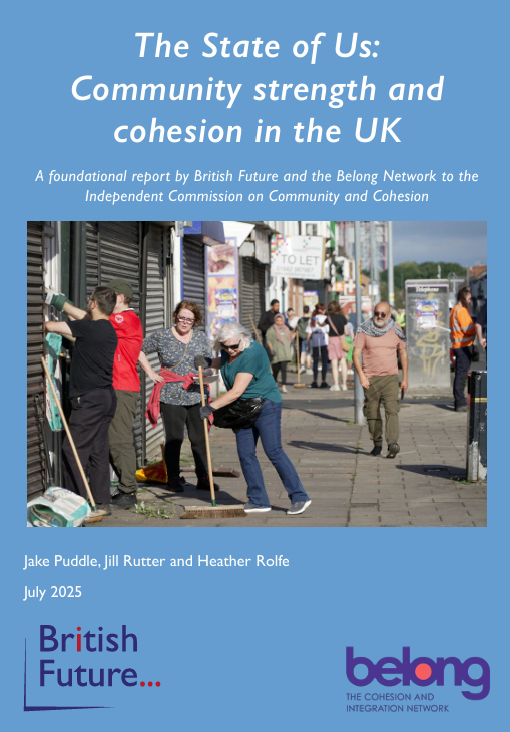
‘The State of Us’ is a joint report by the Belong Network and independent thinktank British Future, offering an authoritative picture of cohesion and community strength in the UK. The report is a foundational input to the Independent Commission on Community and Cohesion launched in summer 2025.

This webinar took place on 20 May 2025 to mark the launch of Parallel Lives - 20 Years On: Exploring the Drivers of Interethnic Contact in the UK - a joint three-year research project between Belong and the Universities of East Anglia, Oxford and Bristol.
This webinar took place on Weds 2 October 2024 to mark the launch of the Belong Network's research project into learning from the Spirit of 2012 archive on the impact of events on social cohesion.
This presentation, delivered at the launch of the Power of Events Report, highlights the report's key findings and recommendations aimed at helping event organisers enhance social cohesion and strengthen community connections.