Learning resources

Explore expert-crafted learning resources designed to weave social cohesion into the fabric of your work

Welcome to our learning resources

Our learning resources are based on rigorous research, evidence and developed with the knowledge from practitioners, delivery organisations and sectoral experts. They aim to offer guidance and learning on how to put principles of social cohesion at the heart of your activities.

The Power of Events

FREE learning resource

Key Info

Certification

Free certificate of completion upon plan submission.

Completion Time

This learning resource takes an average of 5 hours to complete.

Free learning resource

This learning resource is absolutely free! Enjoy!

The Power of Events is an interactive learning resource designed to help you plan events that build social connection and cohesion. It’s made up of two parts:

Part 1: The Power of Events

A step-by-step guide to planning inclusive events that bring people together in meaningful ways. Through about an hour of guided learning and interactive exercises, you’ll create a Theory of Change for your event which you can use to maximise your impact.

It focuses on how to build social cohesion through your event, but you’ll also find extra tools and links in the additional resources section.

Part 2: The Belong Social Value Estimator

This estimates the social value of your event, including how much wellbeing it could generate through social cohesion. It uses your own event data to generate a report. For the most accurate results we recommend you complete part 1 first.

Why use this resource?

When events are done well, they can bring people together to hold conversations, bridge divides, and foster a sense of belonging. But there’s also a risk that events contribute to divisions in a place.

This guide is based on evidence from Spirit of 2012’s ten-year archive showing what works in using events to foster social cohesion. The estimator is based on methodology used by governments, researchers and funders to understand social value.

Who is it for?

  • Event organisers looking to connect communities
  • Funders and local authorities commissioning events

What’s involved?

Part 1 includes five short modules with real-world examples and practical exercises. As you go, you’ll learn how to create the conditions for cohesion and build a custom Theory of Change for your event which you can download to discuss with your team. Part 1 takes between 1 and 2 hours to complete, depending on how familiar you are with social cohesion.

In part 2 you’ll enter some facts and figures about your event to estimate its social value. If you have all your event details ready, it will take around 10 mins to complete if you go straight to the Estimator.

The full resource takes around an hour to complete.

Link to toolkit
The Power of
Volunteering

FREE learning resource

Key Info

Certification

Free certificate of completion upon plan submission.

Completion Time

This learning resource takes an average of 5 hours to complete.

Free learning resource

This learning resource is absolutely free! Enjoy!

The Power of Volunteering learning resource has been designed to help people organising and supporting volunteers and volunteer programmes to provide volunteering opportunities which strengthen meaningful connection between people from different backgrounds.

This helps to reduce prejudice and increase understanding between people from all backgrounds. It also results in more people wanting to volunteer, so it’s a win-win.

Who is it for?

The learning resource aims to help people organising and supporting volunteers and volunteer programmes to provide volunteering opportunities which build stronger social connections between different groups. Strengthening social connections and cohesion helps to reduce prejudice, build trust between people and increases community resilience.

The learning resource could also be used by commissioners, funders and policymakers to think about how to build stronger more cohesive communities and local places. And by businesses and workplaces looking to foster stronger connections and trust with their local area through workforce volunteering schemes.

It is very useful as it covers all aspects of volunteering with examples and videos. The learning resource is very easy to navigate, you are able to save all work, takes the info to the next unit and you can dip in and out when possible.

The Power of Volunteering user

Link to toolkit

The Power of
Sport

Free

Key Info

Certification

Free certificate of completion upon plan submission.

Completion Time

This learning resource takes roughly one hour to complete.

Free learning resource

This learning resource is absolutely free! Enjoy!

Welcome to the Power of Sport learning resource. This learning resource will enable you to explore the vital role that sports and physical activity programmes can play in supporting better social cohesion and integration in local communities and local places.

We know that sports programmes and activities are already having a positive impact on social cohesion and inclusion. Many may not be aware they are doing this. Others have a better understanding of their impact and are already able to demonstrate this.

This interactive learning resource brings together best practice examples, guidance, practical tools and resources to help those who are designing and evaluating sports and physical activity programmes deliver better cohesion and integration outcomes. By the time you have completed this learning resource you will be equipped with your very own Theory of Change tailored to your individual sports programme/organisation.

What do the terms cohesion and integration mean?

Cohesion and integration are terms that describe the extent to which people from different backgrounds mix, interact and get along with each other.

Those differences are typically ethnicity or faith, but they could also be social class, age, gender or disability. Building cohesive communities is about developing neighbourhoods, workplaces, institutions and social spaces where difference is welcomed and celebrated. It is about moving beyond narratives of “us” and “them” towards ideas of kindness, trust, shared identity and a sense of belonging between groups. The terms cohesion and integration have been used at different times to describe this important idea in different ways, but here we are using them as entirely interchangeable.

Show More

What role can sport play in building cohesive communities? 

Sport has a unique power to bring people together. When we approach sport the right way, it can play a powerful role in bridging divides and helping people to understand and connect with one another.

Designed well, sport has the power to break down barriers between individuals and challenge ingrained prejudices. This learning resource explains how sport can help to build greater social cohesion and provides practical support for designing and evaluating sports and physical activities that can help to achieve this.

Show More

Is this learning resource for you?

Are you designing or delivering a sports programme or activity involving sports that will bring people from different backgrounds together?

Are you commissioning a programme that is focused on improving social cohesion, or which could play a role in helping build more cohesive communities?

Are you conducting an evaluation of a sports programme or activity involving sports that involves people from different groups?

If you answered yes to any of the above questions, then this learning resource is for you!

This learning resource is for those commissioning, designing, delivering and evaluating sports programmes that could play a role in helping to strengthen cohesion and integration in their local area.

  • Funders and commissioners can ask for proposals to be submitted on the basis of learning resource completion
  • Project initiators can design and evaluate their project with the aid of this learning resource
Show More

How do you use this learning resource?

This learning resource provides best practice examples, opportunities to reflect on your practice, and questionnaires to support and develop your understanding.

You can save your results and come back at any time! After each section, we will email you a copy of your answers to save for future reference.

Each section includes:

  • Key questions about your programme:
    • What are the social cohesion outcomes you might be able to help address?
    • Who are the target audiences?
    • How will you design your programme in a way that will support social integration and cohesion?
    • How will you check that you are having your intended impact?
  • Best practice examples and case studies from other sports programmes
  • Signposting to relevant data sources, research and resources
  • Templates and mini activities to develop your knowledge and improve your practice
Show More

What does this learning resource contain?

The learning resource includes case study videos, links to useful external resources and interactive exercises, and guides you through creating your own Theory of Change tailored to the needs of your organisation/sports programme.

  1. explains how sport and physical activity can lead to greater cohesion and integration
  2. provides a practical guide to support you in the design and evaluation of these activities

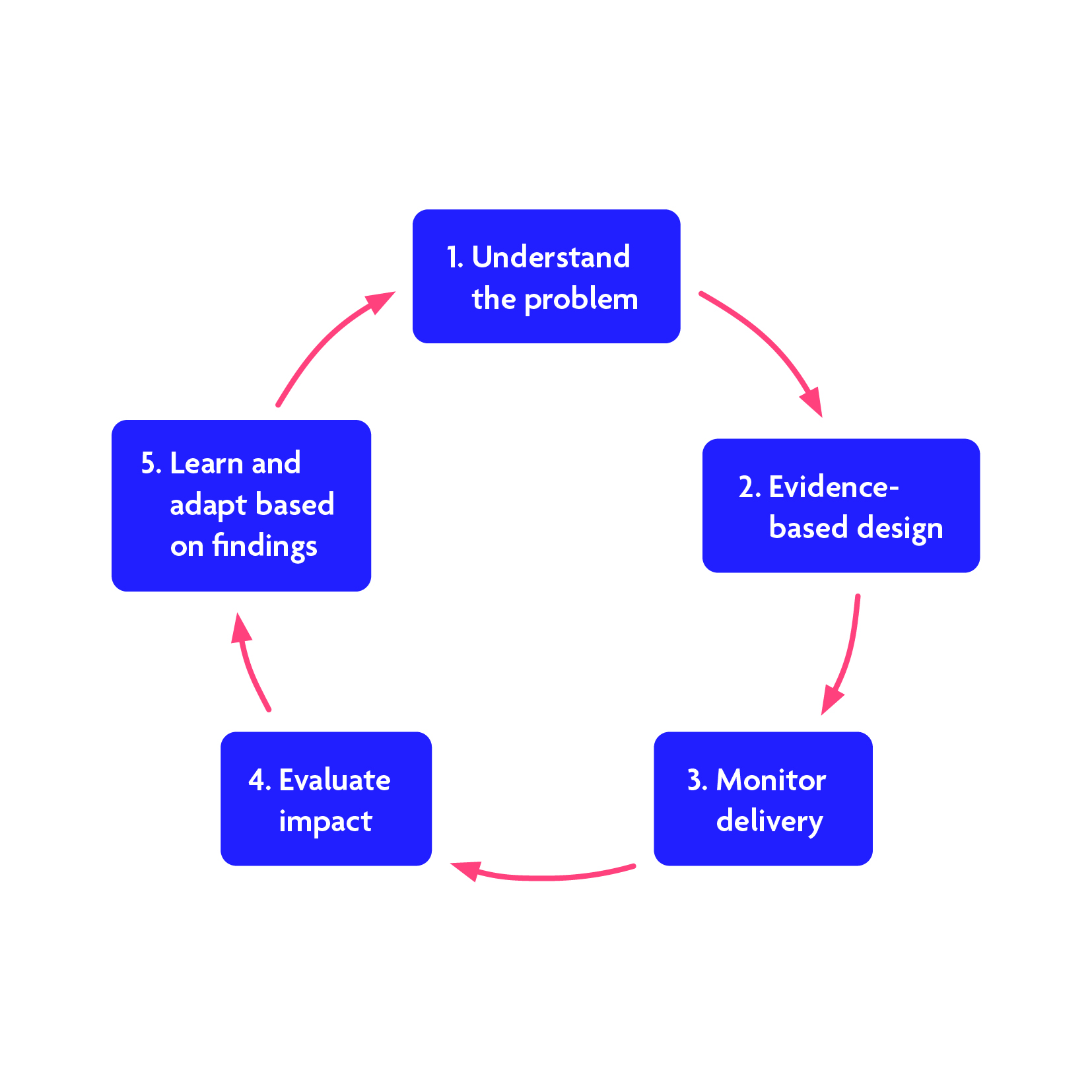
It is structured around sequenced steps, based on the different stages of programme development, delivery and evaluation, as displayed in the following flowchart:

Show More
Link to toolkit